Daring to Imagine | Mark S. Burrows
Poems are a peculiar form of language. They don’t seek to inform. They don’t instruct. They refuse to be maneuvered into some practical function or other. What do they do, then? They invite us to wonder about this world, about our lives, about what meaning we can find amid the madness of it all. They tend to wander – now and then and nowhere in particular – with a kind of indirect knowing that weaves a thread through and beyond our understanding. They call us to linger with words that unsettle and arouse us. They fill us with unexpected images that might puzzle and occasionally delight us. They greet us with those wise silences by which we dare to imagine ourselves anew. Above all, they carry some form of startlement within them. It might be a small nudge that carries us beyond our interpreted world. But it could be an interruption that clears the way for new imaginings. Like these lines, stolen from the middle of a longer poem entitled “If Snow Can Imagine.” How do you remember the snow that lingered in its long winter visitation here in Maine? Here’s one way to imagine it:
…It’s happy in its own wordless way,
not knowing anything about spring
and daring to imagine – if snow can
imagine – that it’s one purpose in
this life is to dazzle us with light
by day and then turn to wordless
dreaming at night, resting under
pools of blue starlight, knowing
the one grammar of praise
and turning to sing it without
ever making a single sound.
It’s hard to remember, now, that we spent much of January and February under a deep blanket of snow. And it’s strange to imagine snow…imagining. Anything at all. And praise? Can snow praise? Can the owl, creasing the woods at night with its swooping flight? And what of the whale, drifting by night in the sea’s dark depths? Can the stone praise? And what of the heart that has tasted loss and yet knows the ever-surging miracle of life?
Poems like this offer us windows through which we can imagine ourselves and our world anew. They unsettle us from the dull routine of the familiar. They open us to the unexpected. They gesture toward what is hidden, that edging mystery swirling within and around us. They invite us to dance with them at the boundaries of the unsayable. In all such ways, “poems are not emotions…but experiences,” as the Austrian poet Rainer Maria Rilke put it. Some Spring evening, find your way out to a quiet place that was blanketed with snow through the winter now past. Listen to the silences it left behind. Remember how it dazzled you by day, and by night reflected moonlight and the “pools of blue starlight” back to your waiting eyes. Imagine, in its now hidden presence, that snow somehow knows “the one grammar of praise.” That it dreams, as you do. They it can even sing – as you also know to do – “without ever making a single sound.”
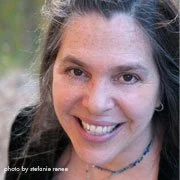
Mark S. Burrows is an award-winning poet and translator and is the co-founder and co-director of the Camden Festival of Poetry. His most recent book is You Are the Future: Living the Questions with Rainer Maria Rilke. He lives and writes in Camden.